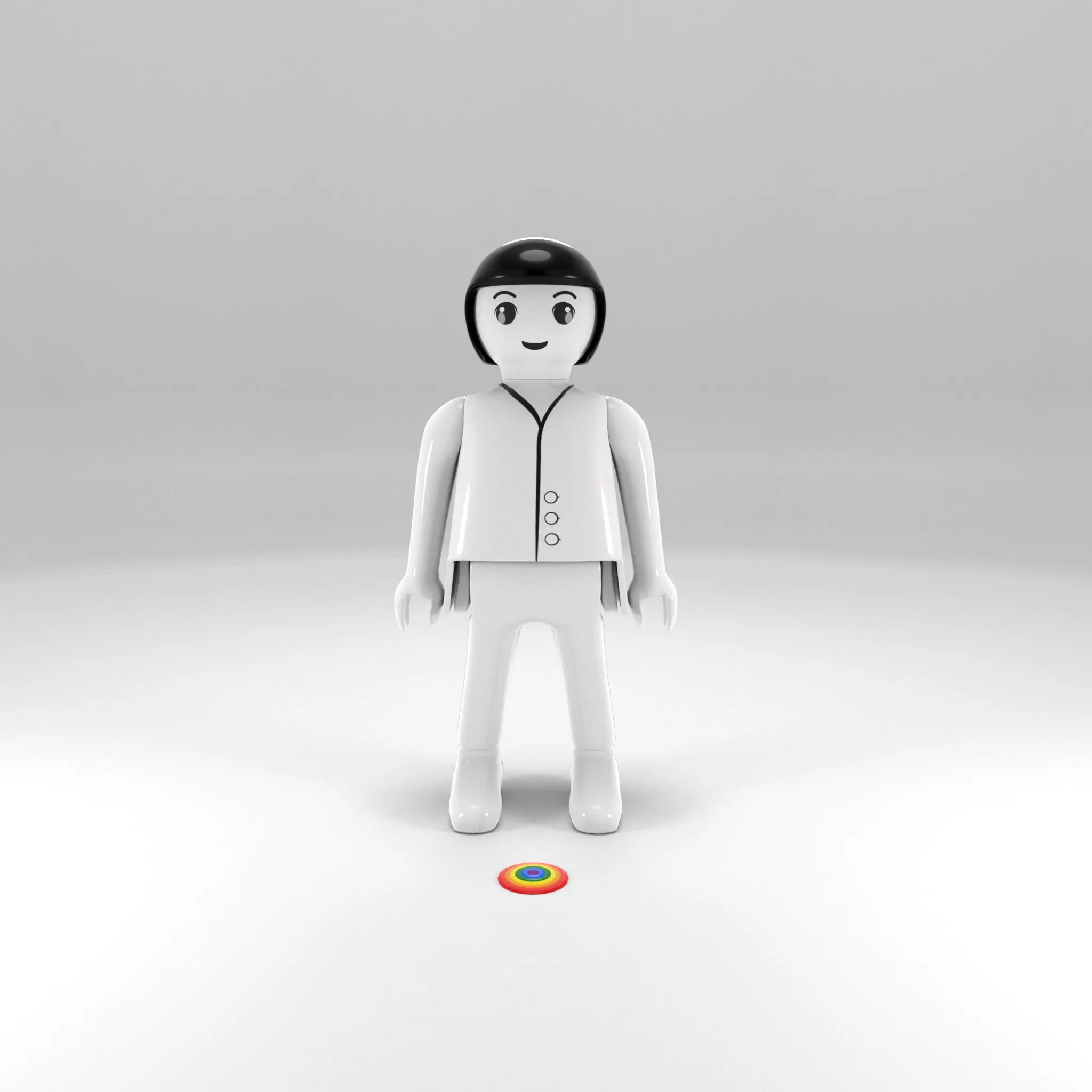
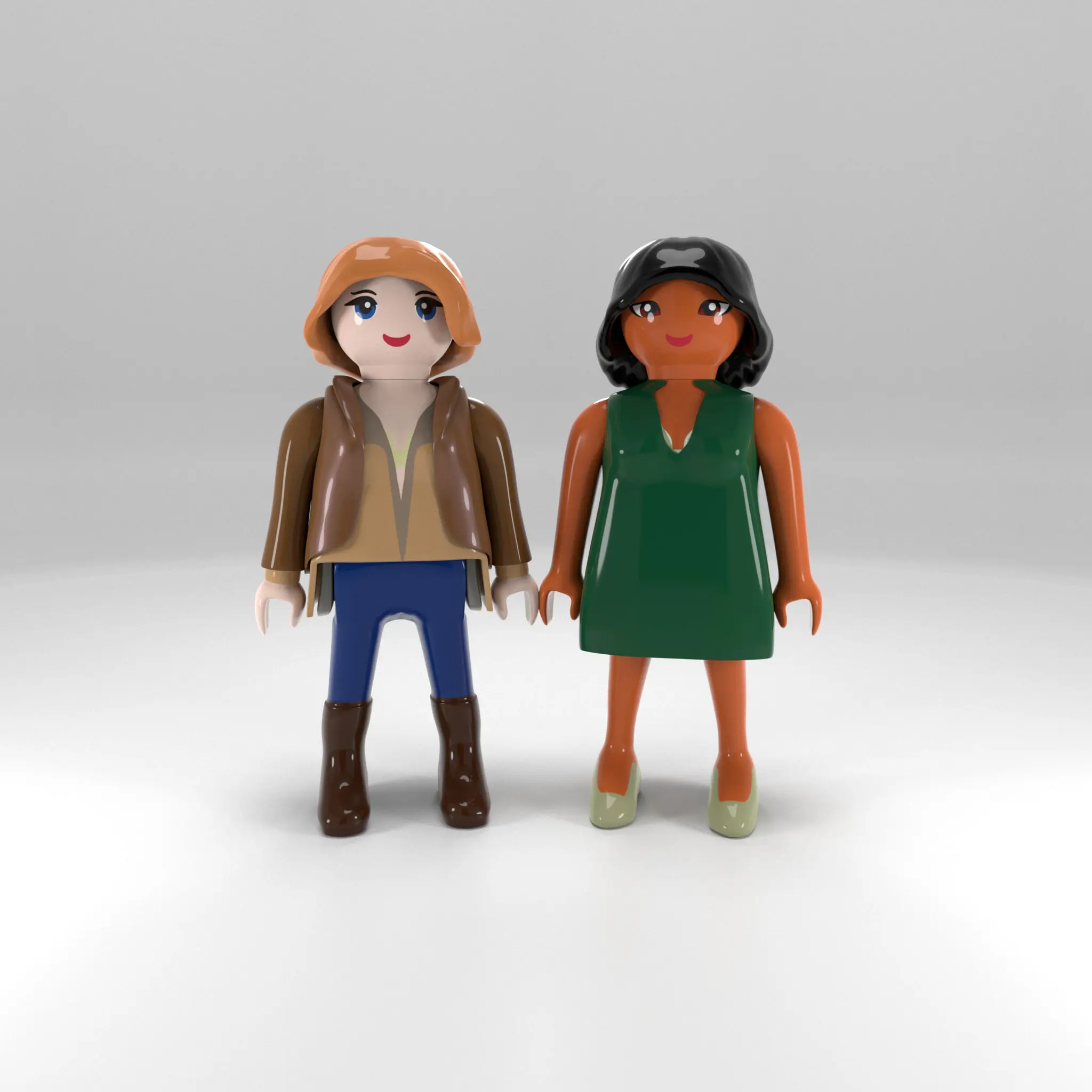
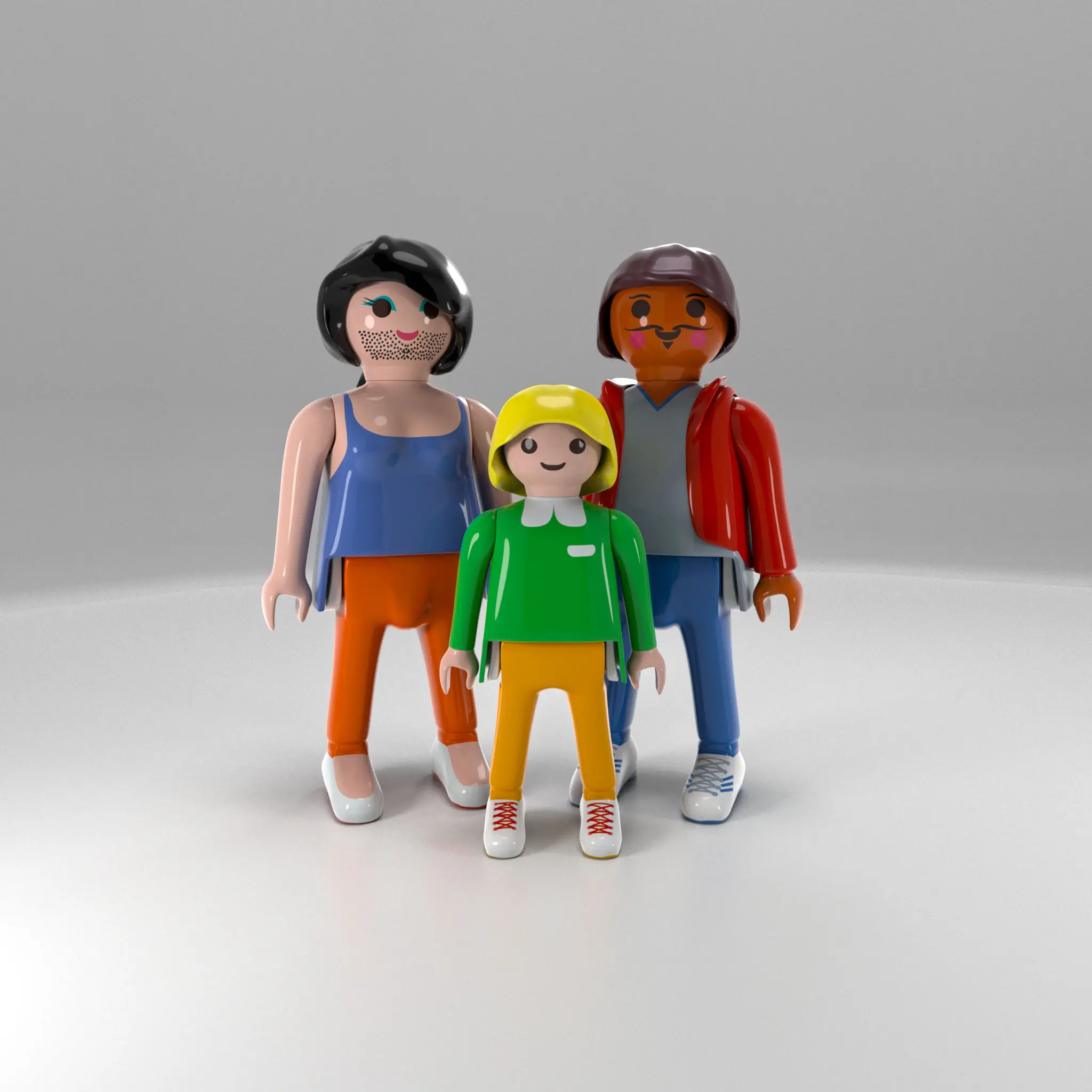
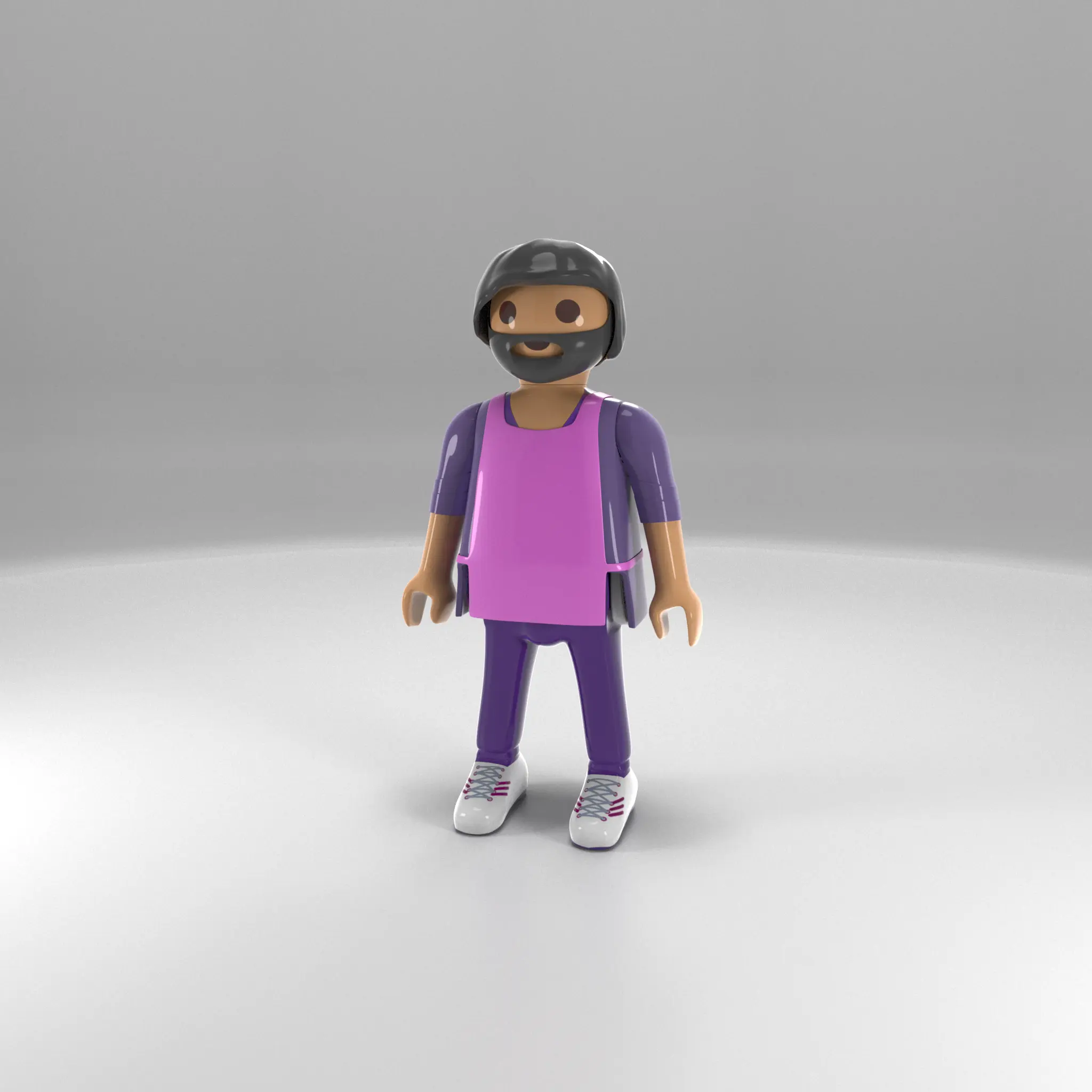
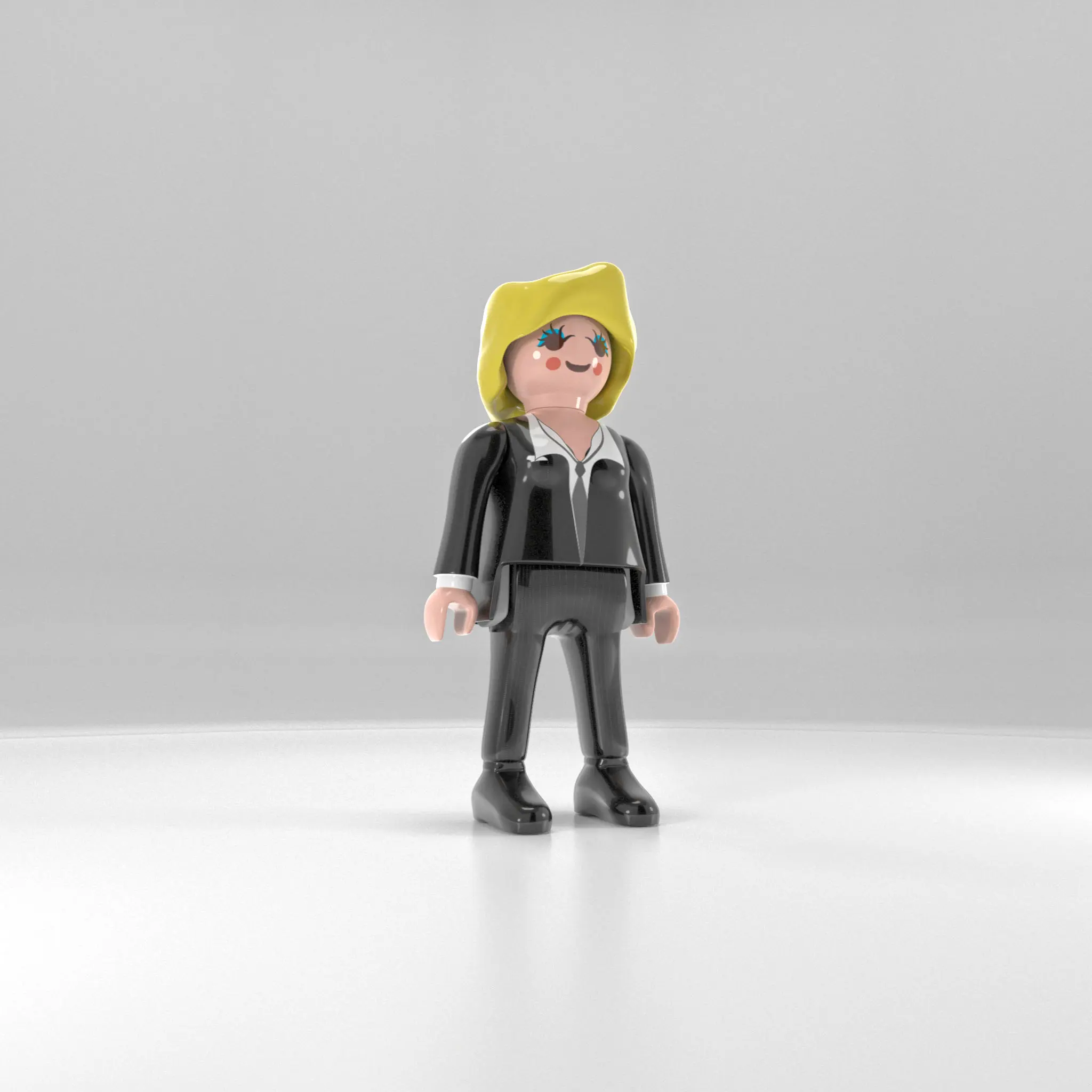
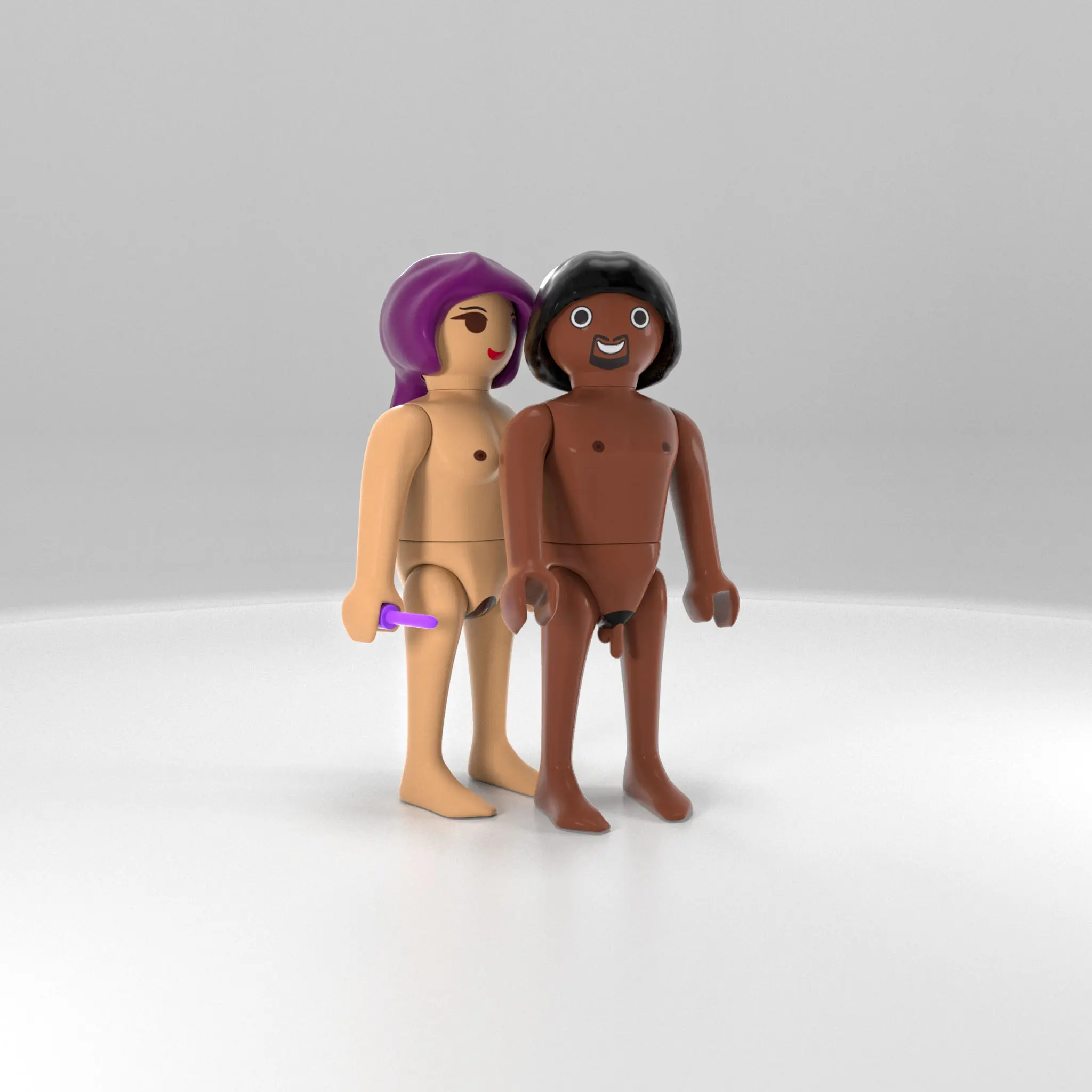
It started with a subway sign. Vienna, 2012. I was underground, watching the city move around me, when I noticed the pictograms requesting passengers give up their seats for those who need them. What caught me wasn't just the gesture — it was the iconography. The range of figures: different ages, different bodies, a person holding a child. At that moment I thought: in Mexico, we are still far from having images like these in public space. Images that make room for everyone.
That same trip, walking through a toy store, I stopped in front of a wall of Playmobil. Part of my childhood, frozen in plastic. Two floors down, a subway sign was quietly proposing something more equitable than what I found here. The female figures: housewives ironing, watching children. No female spies. No female pirates. No men doing domestic tasks.
I filed the contradiction away and kept moving. But it followed me.
Four years later, back in Mexico City, I returned to it. By then I had been living between countries long enough to understand that borders don't only separate geographies — they separate versions of reality. What is considered normal in one place is invisible in another. And what is invisible to adults is being handed, every day, to children in the form of a toy.
Persona is the project that grew out of that discomfort. It began as a systematic study of the 2016 Playmobil catalogue — all 545 human figures, analyzed by gender, skin color, profession, and object. The methodology was straightforward: I downloaded the complete catalogue, catalogued every figure, and let the data speak.
What it said was this: of 545 figures representing human beings, 305 were male and 150 were female — a ratio of two to one. Of those 305 male figures, 276 were white. Of the 150 female figures, 138 were white. The world Playmobil built in 2016 was overwhelmingly pale, and its women were outnumbered, outranked, and outarmed.
Men were firefighters, astronauts, engineers, knights, spies, bandits, sailors, submarine operators, Viking warriors, samurai. Women were mothers, brides, fairies, princesses, and — when they did enter professional spaces — nurses, veterinarians, teachers. Men carried weapons. Women carried mirrors. Men faced danger. Women waited.
I want to be careful here. I am not arguing that Hans Beck, who designed the original Playmobil figures in 1974, sat down with the intention of reinforcing heteropatriarchy. And the 2016 catalogue does show some movement — a handful of men appear in domestic settings, and a few of the rigid categories I had noted in Vienna no longer exist in quite the same form. The system was shifting, but slowly, and incompletely. That incompleteness is, in some ways, more revealing than a clean before-and-after. It shows a machinery that adapts just enough to avoid scrutiny, while its underlying logic remains intact.
That logic is what Judith Butler calls gender performativity. Butler argues that gender is not a fixed identity but an ongoing performance — a set of acts repeated so consistently, across so many contexts, that the repetition becomes invisible and the performance hardens into fact. What Persona asks is: at what age does that performance begin? The data suggests it begins before we can read. It begins in the color of a box. It begins in which figure gets the sword and which gets the house.
My own biography runs through this project. I was born in Mexico City and have lived since the age of nine across five countries — the United States, Canada, Germany, Spain. Each crossing taught me that what I thought was natural was, in fact, local. That the stories a culture tells about who a man is, who a woman is, what a body is permitted to do — these are not universal. They are constructed. And if they are constructed, they can be reconstructed.
This is the same impulse that drives Crossed Cultures, my parallel body of work on intercultural exchange. Both projects begin the same way: entering a space, reading its visual grammar, and naming what that grammar is quietly reproducing. In a toy store, the grammar is encoded in color palettes, figure ratios, and the objects assigned to each body. In a city, it is encoded in architecture, signage, and the shapes that public space makes room for — or doesn't. The methodology is the same. The question underneath is the same: what does this space teach us about who we are allowed to be?
The semiotics of a toy store are not innocent. The colors assigned to aisles, the professions printed on boxes, the ratio of pirates to brides — these are a curriculum. Persona is an attempt to make that curriculum visible, because things that are visible can be questioned, and things that can be questioned can change.
We cannot wait for the toy industry, the advertising industry, and the media to evolve on their own schedule. It is our responsibility — as adults, as educators, as people who were once children and will one day hand something to a child — to ask what we are teaching when we are not paying attention. To seek information. To build a value system rooted in equitable relationships rather than inherited roles.
"One is a woman since she operates as a woman in the dominant heterosexual structure."
— Judith Butler, Gender Trouble: Feminism and the Subversion of Identity